WHEN SPEED BECOMES A WEAPON OF DESTRUCTION
By Olanrewaju Osho
1/4/20263 min read
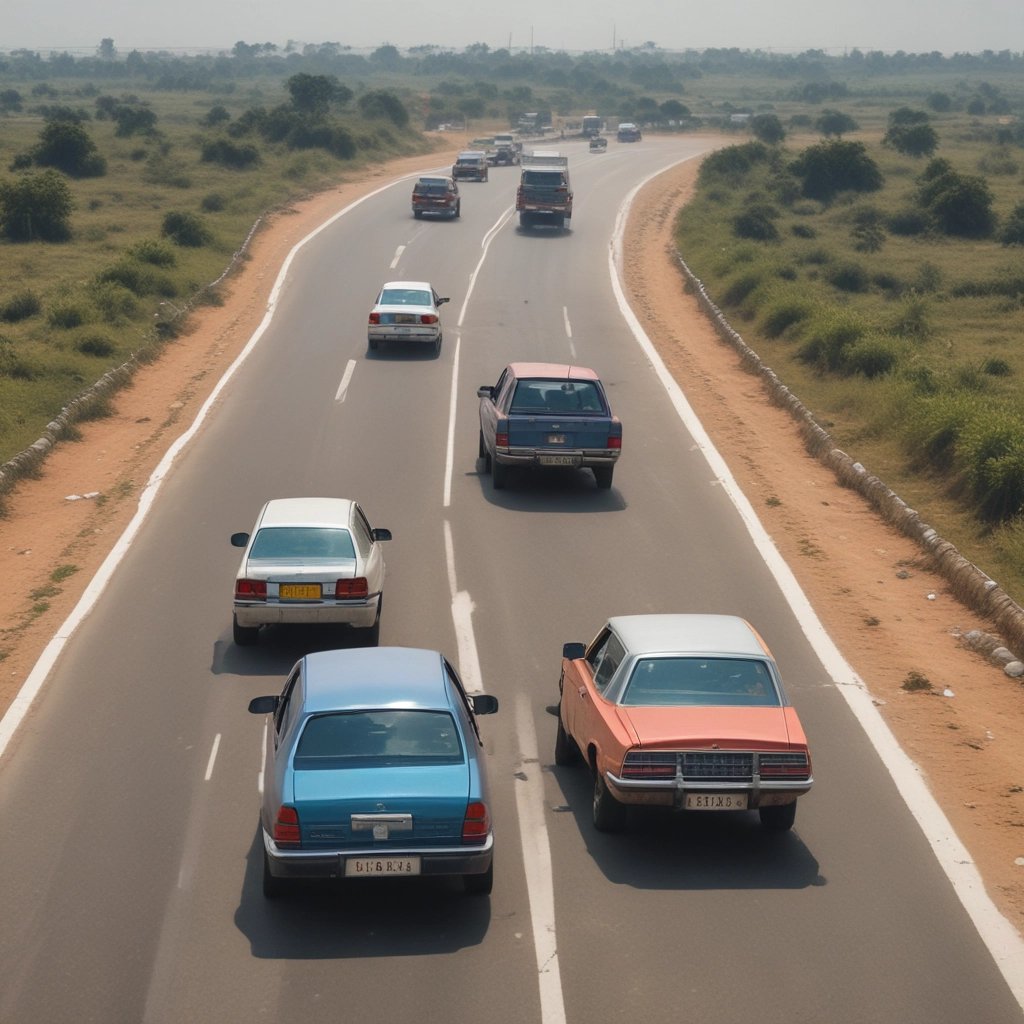
Speed is one of the leading causes of road crashes globally. Ironically, the better the road, the greater the temptation to drive faster—and the deadlier the consequences.This is why good roads are still killing people all over the world. Smooth asphalt often deceives drivers into forgetting a simple truth: speed reduces control, reaction time, and survival.
For nearly a year, a friend and I argued about speed as we drove to work together every day. I insisted on moderation. He mocked my caution.
“Slow driving is for amateur drivers like you,” he would say, reminding me proudly that he had driven for over 25 years without an incident.
Two years later, we lost him—and another colleague who was travelling with him—to a fatal road crash caused by a tyre blowout at high speed. Two brilliant accountants, cut down in their prime, not by fate but by excessive speed.
My friend's 27 years experience did not save him and his colleague when it mattered most. Confidence did not protect them. Speed killed them. It was their death that God used to draw me into road safety interventions and advocacy.
Speed Does Not Forgive. It lacks capacity to pardon needless mistakes or arrogant display of over confidence. Speed is vicious. It strikes whenever it is stretched to the limit in an environment conducive for its venom. When it erupts, it does so like an angry volcano. Embracing excessive speed is like riding on a tiger habitually.
On July 3, 2025, former Liverpool forward Diogo Jota and his brother Andre Silva died in a tragic car crash, just days before Jota’s 29th birthday. A tyre blowout occurred while Jota was trying to overtake another vehicle on Spain’s A-52 highway around 12:40 am. The car veered off the road and was engulfed in flames immediately.
Again, speed was the silent accomplice here.
At a lower speed, a driver in distress might be able to regain control. At high speed, physics takes over—and death could follow swiftly except God intervenes.
The same pattern of overtaking on excessive speed appeared in the crash along the Lagos–Ibadan Expressway that claimed the lives of Sina Ghami and Latif “Latz” Ayodele, two close friends of Anthony Joshua.
SPEED IN NIGERIA
The most frequent offenders of excessive speed in Nigeria are not ordinary citizens alone. They include:
Government convoys
Private individuals with security escorts
Young drivers driven by bravado rather than judgment.
Speeding by convoys has descended into near madness. Sirens blare, vehicles swerve aggressively, and innocent road users are forced off the road. These drivers behave as though traffic laws do not apply to them—and as though human life is easily replaceable.
In the Anthony Joshua's incident, the driver was reportedly being escorted by a security vehicle. When the escort team noticed excessive speed, they should have intervened. Had they done so, the two lives wasted would likely still be alive today.
Silence in the face of danger is complicity.
THE DEADLY MYTH OF CONTROL
Many drivers believe speed equals skill. Speed is not equal to skill or driving excellence. Speed narrows vision, lengthens stopping distance, magnifies minor mechanical failures, and turns manageable errors—like tyre blowouts, a broken down vehicle, sudden animals crossing —into fatal disasters. No amount of experience can outdrive physics.
Every sane driver must understand this timeless wisdom:
It is better to kill speed than to allow speed to kill you.
HOW TO ADDRESS THE MENACE OF OVER-SPEEDING
To drastically promote road safety and reduce traffic fatalities, we must intentionally and urgently address the problem of excessive speeding.
Jurisdictions with the problem of speed must do the following:
1. Strict Enforcement Without Exceptions.
Speed limits must be seriously enforced. The enforcement must apply equally to everyone—government officials, convoys, security escorts, and civilians alike.
No siren should grant immunity from the laws of physics or the law of the land.
Automated speed cameras and radar enforcement must be expanded, especially on highways.
2. Convoy Protocol Reform.
Security operatives must be trained to restrain, not encourage, reckless driving.
Escort teams should be empowered—and required—to caution or stop drivers who overspeed.
No mission justifies endangering lives.
3. Public Education That Tells the Truth.
Road safety campaigns must not glorify speed. It must be built around real stories. It must tell stories of lives lost, families shattered, and futures erased by overconfidence.
Speed should be exposed as truly socially unacceptable. It should not be promoted as a behaviour to be admired.
4. Engineering Controls.
Good roads must be complemented with:
Speed-calming designs
Intelligent speed assistance systems
Clear, unavoidable signage
A good road without speed control is a silent killer.
5. Personal Responsibility.
Every driver must choose humility over ego. Experience is not immortality. Confidence is not invincibility.
Arriving late is always better than not arriving at all.
Speed is not just a number on a dashboard. In the wrong hands, it becomes a weapon of destruction that could cut short brilliant dreams and destinies.
Too many brilliant lives—professionals, athletes, parents, friends—have been wasted because someone believed they were “in control.” With speed, no driver is truly in control.
We must fiercely and forthrightly confront the culture of speed before it buries more of the world's best in their prime.
Olanrewaju Osho promotes development and safety in Africa through Safety Beyond Borders and Inspire Nigeria Initiative.